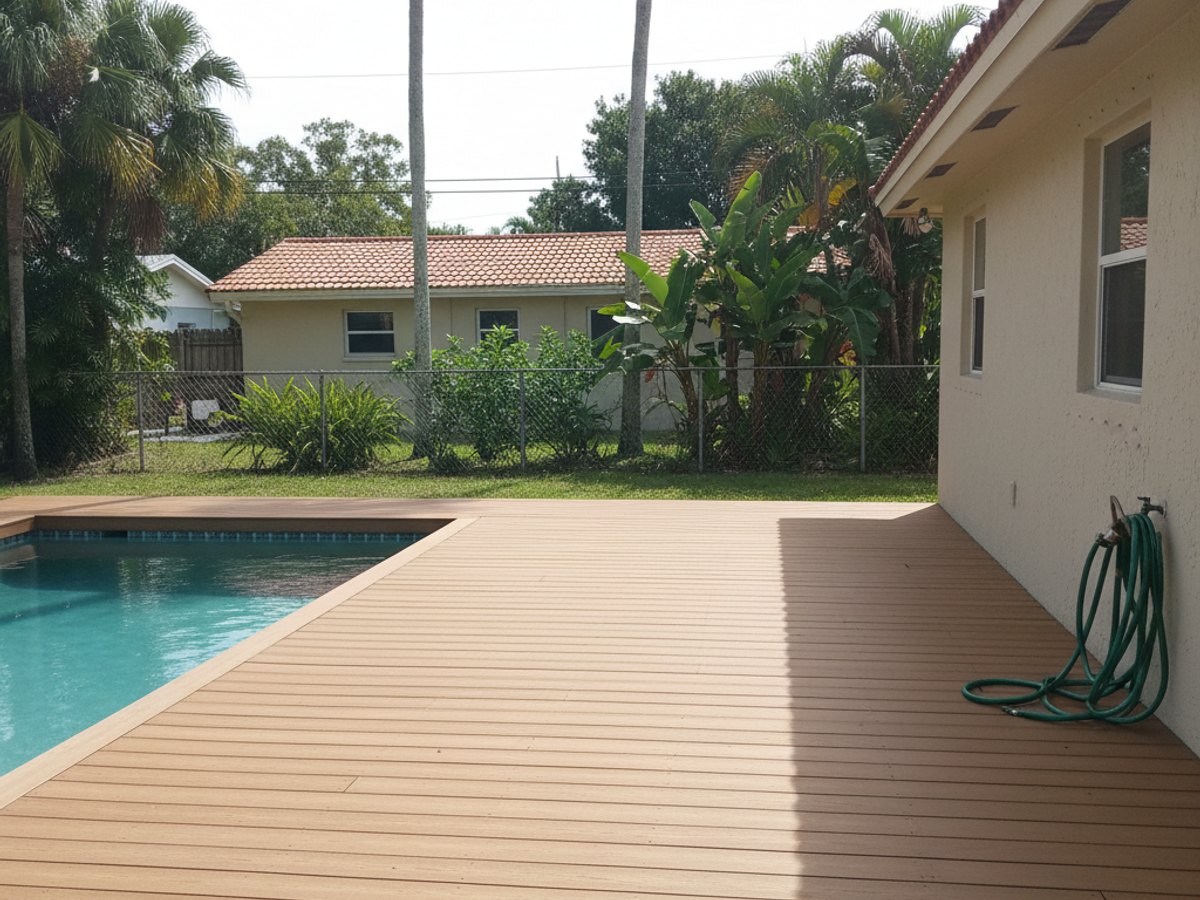
People ask us this more than almost anything else. They want to know if there's a wrong month to build, and the honest answer is yes, there kind of is. It's not that we won't work in July. It's that July makes certain parts of the job harder, slower, or riskier to get right, and you should know why before you pick a start date.
Brandon sits in that stretch of Hillsborough County where the weather follows a pretty predictable split. You've got a long dry season from roughly October through May, and then June through September turns into daily afternoon thunderstorms, high humidity, and heat index numbers that sit well over 100. Hurricane season runs June 1 through November 30. All of that matters for a deck build in ways most homeowners don't think about until they're in the middle of one.
Concrete footings don't like getting rained on
Every deck here starts with footings, usually poured concrete piers set below the frost line, which in this part of Florida basically just means below grade enough to sit on stable soil. Concrete needs time to set up before anything touches it, and it needs to do that without a downpour washing over the top or without standing water softening the hole it's sitting in. In the dry season that's a non-issue. In July, when a storm can roll in at 3pm with zero notice, we're watching radar and timing pours around it. A footing needs about 48 hours before you can build on it and closer to 28 days to reach full strength, so getting that first pour right matters more than people realize. Rushing it in soggy, saturated soil during rainy season is how you end up with a footing that settles unevenly a year later.
Sandy soil, which is most of what you'll find around Brandon, actually helps here. It drains fast and doesn't hold water the way clay does. But low-lying lots, especially anything near the Alafia River or older parts of town with more fill dirt mixed in, can sit with a high water table for weeks after a wet summer. That changes how deep and how wide a footing needs to be, and it's part of why a site visit before any quote matters.
Pressure-treated lumber needs to dry out first
Most framing lumber here comes pressure-treated and arrives from the yard still wet, sometimes visibly dripping. If you build with it right away that's fine, wood framing is meant to handle that. But if you want to stain or seal it, you can't do that until the wood dries down to the right moisture content, usually 2 to 4 weeks outdoors depending on humidity. Try to stain wet PT lumber and the sealer just sits on top instead of soaking in, and you'll be redoing it within a year. In August, with humidity sitting at 80% most days, that drying window stretches out. In February it's a lot shorter.
Staining and sealing needs a dry stretch, not a dry day
This is the one people underestimate most. A stain or sealant typically needs 24 to 48 hours of no rain to cure properly, and ideally the wood surface isn't wet from morning dew either. During rainy season, finding two dry days back to back in a row isn't guaranteed. We've had jobs where we applied a coat, got rained on four hours later, and had to strip and start over. That's wasted product and wasted time, and it's avoidable by scheduling staining work for the drier months. October through April gives you long stretches of clear days where a coat can actually cure the way the manufacturer intended.
Composite decking handles heat differently than wood
If you're going composite instead of wood, the weather concerns shift. Composite boards expand and contract with temperature more than people expect, so installers leave gapping between boards specifically sized for Florida's swing between a cool January morning and a 95-degree July afternoon. Install composite boards tight together in the dead of winter and you can get buckling once summer heat hits. We account for that regardless of season, but it's one more reason an experienced crew matters more than the calendar alone.
Permits, inspections, and HOA timing
Most deck work in Brandon falls under Hillsborough County permitting, and depending on the scope that usually means a footing inspection before the concrete gets covered, a framing inspection before decking goes down, and a final inspection once railings and stairs are in. None of that changes by season, but the backlog does. Inspectors get busier in spring when everyone's trying to get a project done before summer heat sets in, so permit turnaround can run a bit longer March through May than it does in the dead of winter.
A lot of Brandon neighborhoods, especially newer subdivisions like FishHawk and parts of Lithia built from the late 1990s on, have active HOAs with their own design approval process that runs parallel to the county permit. That can add a few weeks before work even starts, so if you're hoping for a deck finished by a specific date, build that lead time in. Older streets around central Brandon and Valrico sometimes have less HOA oversight but more surprises underground, old irrigation lines, abandoned septic fields, that kind of thing, which is its own reason to have a crew that knows how to read a site before digging.
So when should you actually build
If we're being straight with you: late fall through early spring, say November through April, is the best window for Brandon. Lower humidity, far less rain, mild temperatures that make curing and staining predictable, and inspectors who aren't buried in a spring rush. That said, plenty of good decks get built in summer too. It just means more schedule juggling around storms and a longer wait before you can stain. If you're trying to have a screened porch or new deck ready for cookout season, starting the planning and permitting process in late winter gets you built and cured before the humidity rolls back in.
We've built and repaired decks through every season this area throws at us, and we can tell you honestly which parts of your project are season-sensitive and which aren't. If you're weighing timing against your own schedule, it's worth a conversation before you set a date. Take a look at our deck builder work around Brandon if you want to see what we've done and how we plan around the weather here.